



Player eligibility in college sports has become a thorny and occasionally confusing issue in recent years, with athletes staying in school longer and entering the college ranks from non-traditional backgrounds.
This week, the NCAA aimed to add some clarity to the matter.
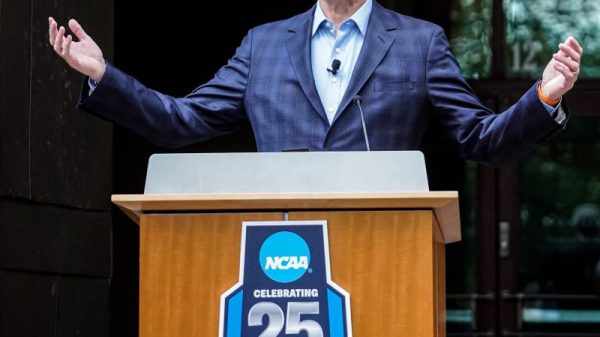
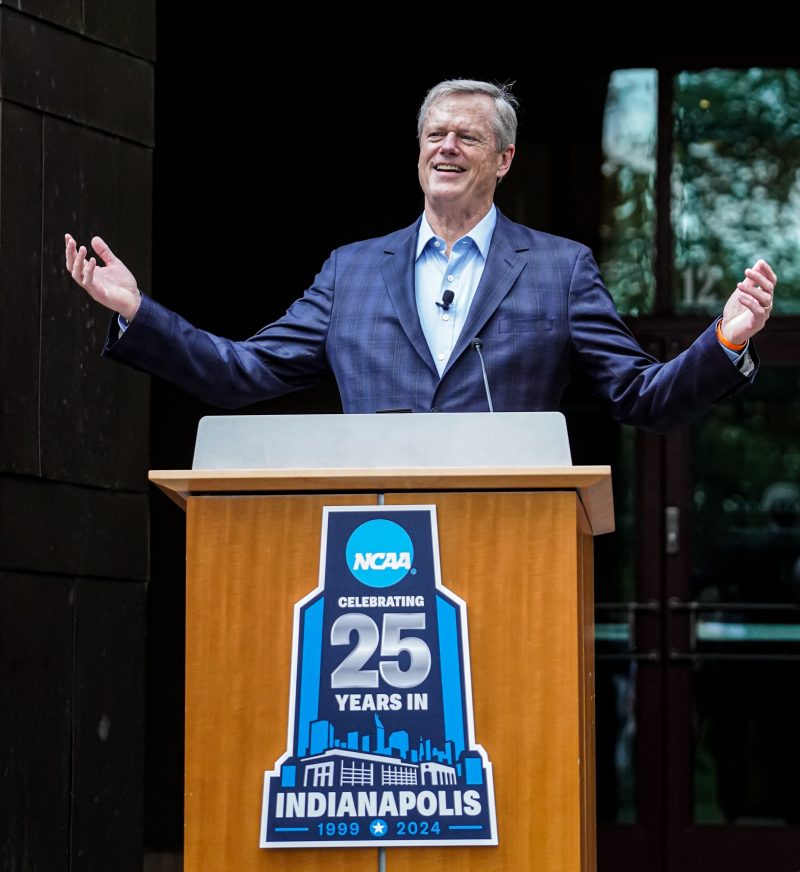
In a statement released Tuesday, Dec. 30, NCAA president Charlie Baker said the NCAA “has not and will not” grant eligibility to prospective or returning men’s college basketball players who have signed an NBA contract or a two-way deal with an NBA franchise and its G League affiliate.
The clarification comes about a week after Baylor announced the signing of center James Nnaji, the No. 31 overall pick in the 2023 NBA Draft who has spent the past five years playing in the EuroLeague. Though Nnaji has played in the NBA Summer League, he has never played in an NBA game. Because of that, he was ruled eligible by the NCAA and is expected to play for Baylor this season.
‘As schools are increasingly recruiting individuals with international league experience, the NCAA is exercising discretion in applying the actual and necessary expenses bylaw to ensure that prospective student-athletes with experience in American basketball leagues are not at a disadvantage compared to their international counterparts,” Baker said in a statement he posted to social media. “Rules have long permitted schools to enroll and play individuals with no prior collegiate experience midyear. While the NCAA has prevailed on the vast majority of eligibility-related lawsuits, recent outlier decisions enjoining the NCAA on a nationwide basis from enforcing rules that have been on the books for decades — without even having a trial — are wildly destabilizing. I will be working with DI leaders in the weeks ahead to protect college basketball from these misguided attempts to destroy this American institution.’
Nnaji is the latest player with professional experience who is making the jump to college basketball with athletes now able to earn money off of their name, image and likeness.
Several former professional players from overseas have suited up for college programs in recent seasons. Though neither were NBA draft picks like Nnaji, two former G League players — Thierry Darlan and London Johnson — signed with college programs this fall, with the former going to Santa Clara and the latter signing with Louisville.
On Saturday, Dec. 27, On3 Sports reported Trentyn Flowers, who has a two-way contract with the Chicago Bulls and has played in two NBA games this month, was drawing interest from college programs. Many of the programs mentioned in the report, however, denied any involvement with Flowers. The original social media post about Flowers was deleted and On3 apologized for the “poorly produced report,” noting it “fell below our standards.”
The influx of professional players into the college game has drawn intense criticism from some within the sport.
After Baylor signed Nnaji, UConn’s Dan Hurley posted on social media that ‘Santa Claus is delivering mid season acquisitions…this s*** is crazy!!’ While he said he couldn’t blame programs or coaches for making such moves, Gonzaga coach Mark Few took aim at the NCAA, saying “our lack of leadership has really shown.”
Perhaps the most biting critique came from Michigan State coach Tom Izzo.
‘I’ve got a call in to (Baylor coach) Scott (Drew),” Izzo said to reporters on Saturday, Dec. 27. “I’m anxious to see what he tells me. Not saying we’re holier than thou or anybody should not do this or that, but if we’re dipping into that one, if it’s like I’m reading or hearing … and now we’re taking guys that were drafted in the NBA. If that’s what we’re gonna do, shame on the NCAA. Shame on the coaches, too. But shame on the NCAA. Because coaches are going to do what they’ve got to do, I guess.’
Drew defended his move earlier this week, noting international players who went through the NBA draft process but weren’t picked are playing college basketball this season. He added he had a “great conversation” with Izzo.
‘As he said, most coaches are 99% aligned on things that we would like to see done with our game,” Drew said on Sunday, Dec. 28. “At the same time, from my knowledge, until we get to collective bargaining, I don’t think we can come up with rules that are agreeable or enforceable. Until that, I think all of us have got to be ready to adjust and adapt to what’s out there. Early on, when it first came out with G League players, I wasn’t in favor of that either. But again, we don’t make the rules and as we find out about things, we’re always going to adapt to put our program in the best position to be successful, because that’s what we get paid to do.’