














When you play sports, you are taught to always hustle.
Run on and off the field, or the court, when you’re subbed in and out, or in between innings.
Get back and set up on defense to prevent a quick strike from the opponent.
You learn about sportswriting in a similar fashion: Dig for a good story, and then execute it before anyone else.
You sometimes chase down your subject and, if necessary, have difficult conversations to get what you need.
I knew I was about to have one with minor league pitcher Kenny Carlyle. I watched from the press box, high behind home plate at Tim McCarver Stadium in Memphis, Tennessee, as he walked with his head down to the clubhouse behind the right field wall. It was August 1996, my first summer after graduating from college. I was an intern for The Commercial Appeal, and I was eager to talk to him before anyone else.
Carlyle was a local high school star who had played at Ole Miss. He was making his debut back home as a professional opposing player in a Double-A game. But he had been hit hard, and was making the long trip to the showers after being pulled in the fourth inning.
I figured I’d go get him now, while no one else was around. I hurried out there and, when I opened the door, he was pacing in the locker room.
He shot me a glance, and I introduced myself and stated my intention.
“You’ve had all week to talk to me!” he barked.
He then told me my newspaper, ahem, stunk, and, in other choice words, to get the hell out of his space.
I thought about the many lessons being a sportswriter had taught me when I read reports that another newspaper that helped me get my start, The Washington Post, is poised to make drastic staffing cuts to its sports department.
I remembered the confrontation with Carlyle through the eyes of a sports dad: Who in his right mind would have wanted to talk to me right after such a sour homecoming?
I thought about a late-night drive with my son after his final Little League game. He was pretty upset when I tried to talk to him, too.
Covering sports is a lot like raising young athletes. We learn from coaches, teammates, colleagues and competitors, and have truly human interactions and delicate conversations.
Here are four similarities, which might help you think about how your own work and life experiences can feed off each other, too:
Whoever we are, we sometimes need a cool-down period
From the perspective of a young sportswriter, it seemed like the right move to race to the clubhouse to get to Carlyle.
It also, at the time, seemed natural, to try and talk my son through our team being obliterated in the Little League playoffs. I didn’t get a chance to speak first. He let me have it for not pitching him sooner in the game.
I tried to explain my actions, and we wound up shouting at one another on the car-ride home.
As sportswriters, we learn to wait out athletes before approaching them after the heat of games. Often, clubhouses are closed to the media at the professional and collegiate levels at least 20 minutes after a game to allow players to process what has just happened.
How are our young athletes any different? They are angry, too. Their emotions are raw and they haven’t developed control over them. Our first instinct is to correct and justify, when all we really need to do is listen to them vent, or just allow them to decompress.
Carlyle was pitching in front of about 60 family members and friends, including a former teacher who liked to follow him, with her husband, to various minor league stops. He heard them cheering and, like our kids, might have felt like he had disappointed someone.
When I retreated back to the press box after Carlyle shut me out, I mentioned what had happened to his team’s media relations director. This guy had a few years of experience on me, and he said he’d talk to Kenny after the game, when he’d had time to cool off.
YOUTH SPORTS SURVIVAL GUIDE: Pre-order Coach Steve’s upcoming book for young athletes and their parents
‘We all have weaknesses’: The best athletes really love what they do, and that love propels them through the hard stuff
Think back to when you were out in your neighborhood as a kid, your only care seeming to be the game you were playing with your friends.
Tom House, a former major league pitcher, has the same feeling as he has gone on to work with major league pitchers, NFL quarterbacks and now kid athletes. Now in his late 70s, House knows how major leaguers feel like 12-year-olds again on the field, their enjoyment of what they’re doing far exceeding the work required to outpace their competitors.
Author Malcom Gladwell popularized the so-called “10,000-hour rule” in his book “Outliers,” which argues it takes 10,000 hours of practice to become an expert at a skill.
Virtuosos in their field like top Canadian hockey players, The Beatles or Bill Gates, he writes, had access to terrific training and learning opportunities. But they also share a thread of tirelessness to put in the hours.
If you saw the documentary “Tom vs. Time,” in recent years, you know Tom Brady was relentlessly at work behind the scenes – doing speed and agility drills, throwing to receivers, watching video of opponents, carefully monitoring his diet – to be the best.
You notice his intensity, but a kid’s exuberance as he went through it all.
It’s something you observe as a sportswriter when you have the opportunity to talk with a number of world class athletes.
“I read an article as a parent, I wanted to better understand how I can best support my child through sport, and basically, you can’t force anyone to be a champion,” Brenna Huckaby, a three-time gold medal-winning snowboarder told me in January as she prepared for her third Paralympics. “It’s in you. And if you feel like you have what it takes and you love what you’re doing, go out there and give yourself the time to do it and the opportunity to do it because that’s what matters more than when you got into your sport and if your parents are pushing or not. I’ve seen so many athletes end in injury or burnout because of the way that their parents pushed them in sport. You are your best advocate. You are your champion, and I just really believe in that.”
Professional athletes, like our kids, are human beings more than prodigies
Early in my sportswriting career, I would feel star struck when I spoke with someone famous like Jimmy Connors, Dan Marino or Derek Jeter. You quickly learn, though, that pro athletes appreciate it when you take a step back.
They’re used to people fawning over them. When you get them talking about something they like, you both exhale a bit and fall into a casual conversation.
After I waited out Carlyle, the Memphis kid-turned-pro baseball player who was learning to be a public figure, he came back. He walked over to me outside the clubhouse after the game with a smile. The media relations guy had delivered.
“I’m sorry about that,” he said. “I’ve never had anyone follow me like that before.”
Carlyle, who was 25 at the time, was tired and frustrated. His manager, Larry Parrish, a former major league All-Star, had told me Carlyle was going through a “dead arm period.” His velocity had dropped.
“People don’t see the 10-hour bus rides, getting to hotels at 9 or 10 in the morning, then coming out here and pitching,” Carlyle told me.
I’m now a father of two teenagers, and I better understand what he was going through. We have such high aspirations for our kids, and they face enormous pressure, sometimes self-inflicted thanks to the ultracompetitive youth sports environment.
Several athletes, including decorated Olympic gymnast Shannon Miller, have told me how important it was to know their parents loved them for them, not what type of athlete they became.
I have seen too many coaches push, prod and even scream at their kids when they make a mistake. Part of showing our love sometimes is backing off and taking the time to listen to them when they have a bad day.
It’s a quality grown-up athletes value, too.
“People think that people that have done well, it’s a straight line, straight journey; that you have no issues, you’re not scared, things come really easily,” golf Hall of Famer Annika Sorenstam, who is now a sports mom, told me last year. “But I think we all have weaknesses that we got to work on and try to improve.”
We learn what folks are really like when they mask comes off. Have you tried this with your kid?
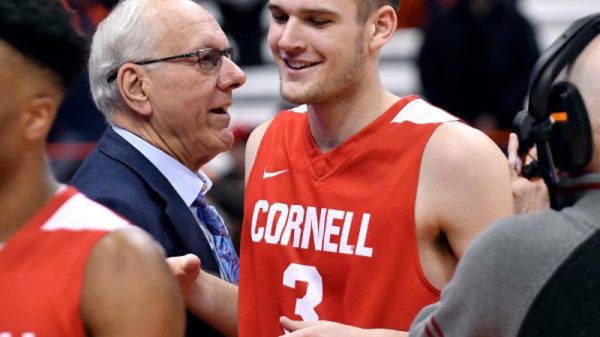
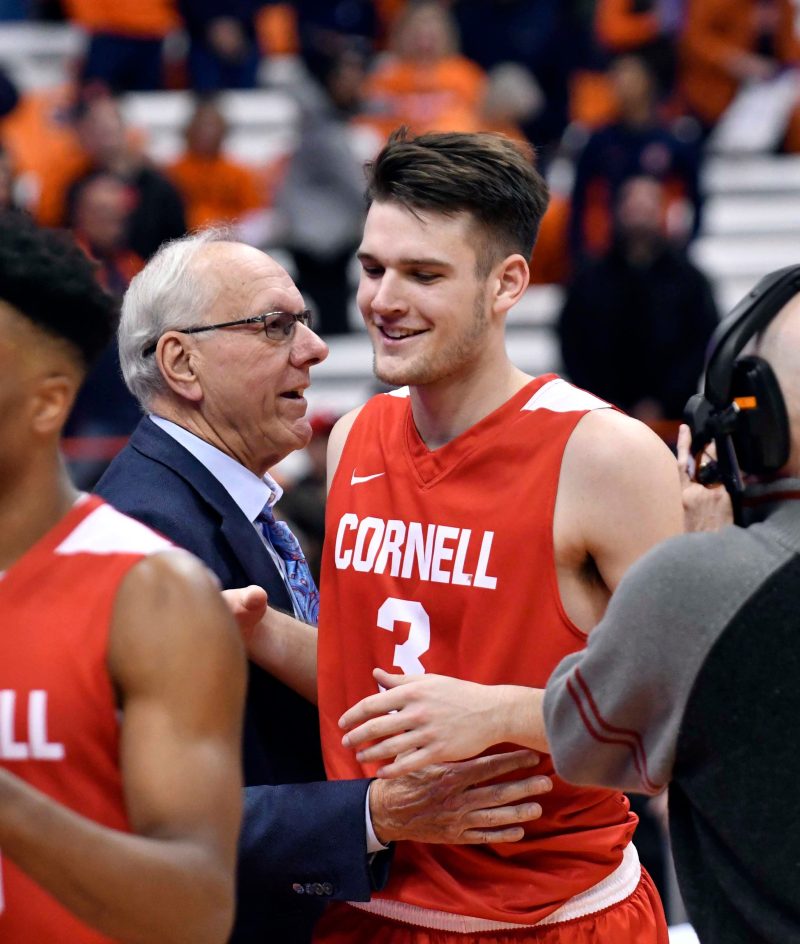
During an interview with the Rochester (N.Y.) Democrat & Chronicle in 2018, Julie Boeheim, the wife of Hall of Fame Basketball coach Jim Boeheim, told sportswriter Leo Roth people are probably disappointed when they meet her family.
“There’s not much here other than the norm and that’s what we want,” she told Roth. “I mean what else is there? We’re experiencing the highs, the lows and the joys and everything our kids feel, we feel, just like every other parent. We want successes for our kids and for them to be good, healthy, happy kids.’’
My job has taught me not to rely on our impressions of people we haven’t met, or haven’t taken the time to understand.
I am a graduate of Georgetown University, where Boeheim and his Syracuse basketball program were reviled. But when I became a sportswriter, and had an occasion to reach out to Boeheim for an interview about then-Georgetown men’s basketball coach Craig Esherick, he called me right back and was gracious with his praise.
He was similarly friendly and accommodating when I reached out to him a little more than 20 years later, when John Thompson, Georgetown’s legendary coach and his sometimes-nasty adversary, had died. He told me for a story that he and Thompson didn’t talk for at least 10 years of their heated confrontations.
A mutual friend, Dave Bing, urged both of them to get to know one another better.
“It was a very tough, almost brutal rivalry. I mean, it was everything you could ever ask for in a physical rivalry,” Boeheim told me. “We played, we went at it as hard as you could go after it and we always shook hands afterwards. Eventually, we talked things out. We still wanted to win every time we played, but we became friendly, we started talkin’ more and, at the end, we were really good friends.”
It changes our perception of people when their mask comes off. How well do you know your kid, at least in terms of sports? Jimmy and Buddy, Boeheim’s sons, played for him at Syracuse while their younger sister, Jamie, headed to the University of Rochester’s basketball team.
About a year in, Jamie realized she didn’t want to play the sport anymore, but she thought that maybe she still had to do it because she was a Boeheim.
She told the Make Mental podcast last year she became closer than ever with her parents when she spoke to them about how she felt. She transitioned away from the sport and eventually became a social worker.
“So many people are kind of quick to assume that my dad especially was upset about the decision and kind of wanted to hold me back from quitting,” she said, “and that really wasn’t what it was at all. They’ve really always just supported whatever I’ve wanted to do and I think the only hesitations they’ve had have been in my best interests in terms of wanting me to have friends and wanting me to be in a social group and, really, the concerns that they had were never about basketball. I couldn’t be more thankful for how things ended up with that.”
If you notice your son or daughter is struggling, or unhappy, talk to them about it. And be open to just listening. You might learn something more about them, as sportswriters try to do with their subjects.
Borelli, aka Coach Steve, has been an editor and writer with USA TODAY since 1999. He spent 10 years coaching his two sons’ baseball and basketball teams. He and his wife, Colleen, are now sports parents for two high schoolers. His Coach Steve column is posted weekly. For his past columns, click here.