




Unlike college athletes, Olympic curlers often remain loyal to their national teams for multiple Olympic Games.
U.S. curler Tabitha Peterson is also a pharmacist. Olympics medalist Cory Thiesse is a lab technician.
Put college basketball on hold, in favor of Cory Thiesse at Olympics.
So, I hear fans say they’re a bit exhausted by the number of transfers in college sports. Flip on a college basketball game on a Saturday afternoon, and you might need a cheat sheet to keep up with who’s on which team.
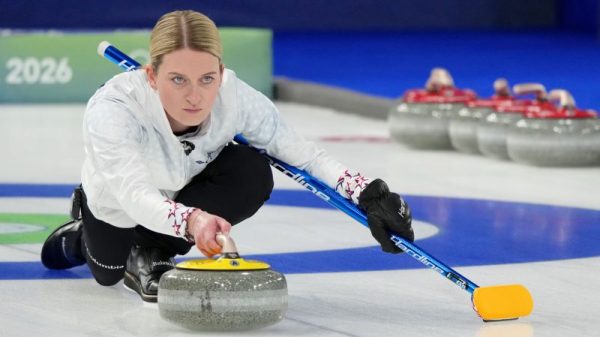
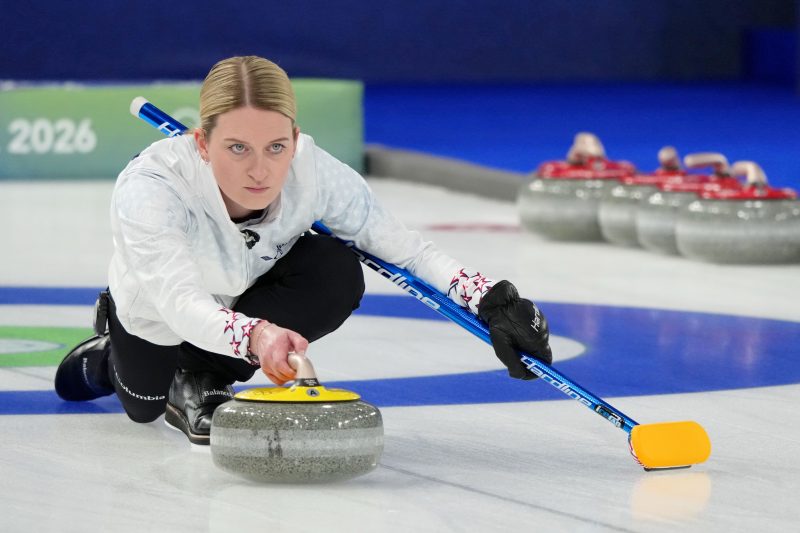
If you find this all a little dizzying, well, I have a solution: Turn on Olympic curling. Yes, that’s the sport in which the athletes send a 42-pound granite stone down a sheet of ice toward a target while teammates use brooms to sweep the ice ahead of the rock.
Strategy meets precision meets teamwork as two teams try to place their stones closest to the center, knock the opponent’s rocks out of the way or curl the stone around guards.
Think of it as table shuffleboard on ice — with a lot of sweeping.
You might need a crash course on the rules. That’s why we have Wikipedia. But, watch curling for any length of time, and you won’t need a roster cheat sheet.
Tabitha Peterson still with USA curling for third Olympics
Take the case of Tabitha Peterson. She’s the skip, aka team captain, of the U.S. women’s team. This is her third Olympics. All with the United States! She didn’t transfer to Czechia or Italy, even though the payday is better for Olympic medalists from those countries and many others. Sister Tara Peterson is on the U.S. team, too, back for her second Olympics.
Then, there’s Cory Thiesse. This queen of the ice teamed up with sweet-sweeping American man Korey Dropkin to win silver in the mixed doubles competition.
Thiesse was an alternate for the U.S. women’s team way back at the 2018 Games. She traveled to South Korea but never got into a match. If curling was college basketball, she would’ve transferred after those Olympics to a country where she’d have a starting spot.
Instead, Thiesse waited her time, plied her craft and partnered with Dropkin to win America’s affection and stoke our patriotism during their stampede to the championship match.
As Thiesse and Dropkin toppled teams from Italy, Estonia and Canada, chants of “U-S-A! U-S-A! U-S-A!” rang out inside the curling center.
Who among us doesn’t love a good USA chant? I’m just trying to imagine such a chant at an Illinois college basketball game, while the Balkan boys David Mirkovic, Tomislav Ivisic and his twin brother, Zvonimir Ivisic, pour in the points for the Euro-Illini.
Thiesse became the first American woman to win a medal in curling. Now, she’ll join the Peterson sisters and Olympic rookie Taylor Anderson-Heide on America’s women’s team. They all live in Minnesota, a curling mecca.
Olympic curlers have jobs outside of their sport
Although the days of Division I athletes spending their offseasons working on an oil rig or baling hay are a thing of the past, these curlers hold down jobs outside of their sport.
When Thiesse isn’t slinging stones, she’s a lab tech at a mercury analysis facility. Tabitha Peterson works as a pharmacist when she’s not leading the American women. Her sister, Tara, is a dentist. Sweeping stones one week, fixing teeth the next.
How can you not admire it?
Here’s the other thing about Olympic curling: You can’t change up the squad in the middle of the event. No adding players from the NBA G League. Nate Oats would be lost as a curling coach. Better stick to college basketball.
Up for an inspirational story? Try this: Danny Casper skips the U.S. men’s team. Two years ago, he was diagnosed with Guillain-Barré Syndrome, a rare medical condition in which the body’s immune system attacks the nerves. At the Olympic Trials, Casper’s team dethroned John Shuster’s team.
If you have even the foggiest knowledge of curling, you know of Shuster. He led the American men at five straight Olympics, and they won gold in 2018. Imagine what Shuster would’ve fetched from the transfer market after the 2018 Olympics from an Eastern European country in need of a skip. Alas, no transfer portal in curling.
I don’t mean to dunk on college basketball. The NCAA tournament remains sacred, the greatest postseason event in all of sports, even if I need a March Madness cheat sheet to remind me 3-point sharpshooter Devin Askew plays for Villanova now, his fifth team in a six-year college career.
March still belongs to college basketball, but for two weeks in February, I’ve transferred my attention to curling, a sport with no portal, and a competition in which a Minnesota lab tech who spent years training to compete for her country makes you chant “U-S-A! U-S-A!”
Blake Toppmeyer is a columnist for the USA TODAY Network. Email him at BToppmeyer@gannett.com and follow him on X @btoppmeyer.