





Mikaela Shiffrin won her first Olympic gold medal since the death of her father in 2020.
Shiffrin won the women’s slalom by a 1.50-second margin, the largest in any Olympic Alpine event since 1998.
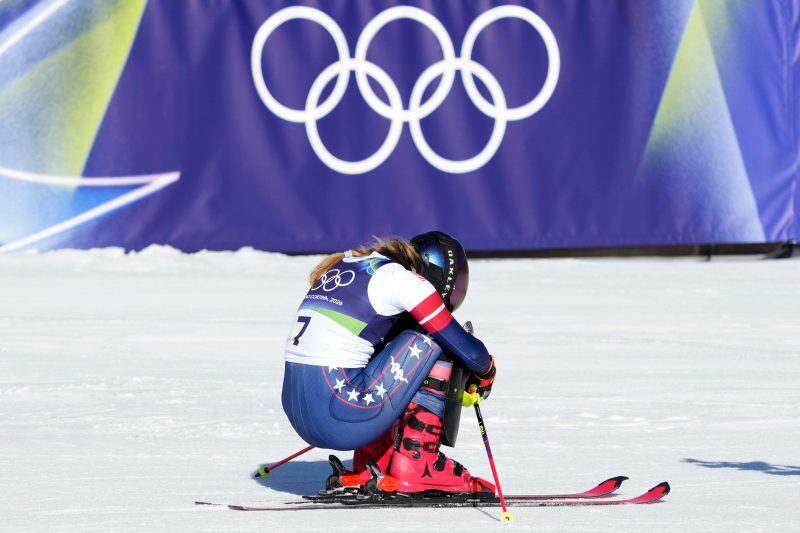
After crossing the finish line, Shiffrin took a moment of silence to honor her late father.
CORTINA D’AMPEZZO, Italy — Mikaela Shiffrin wanted to win Olympic gold in women’s slalom as much as she feared it.
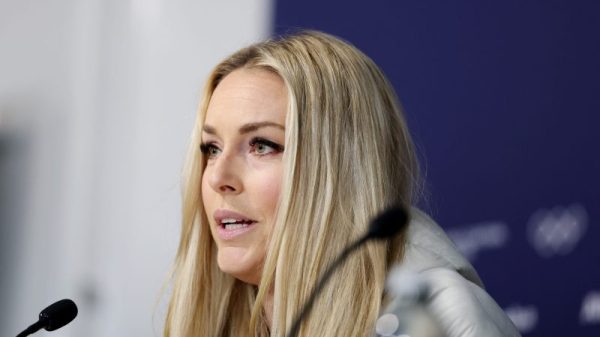
‘Everything in life that you do after you lose someone you love is like a new experience,’ Shiffrin said. ‘It’s like being born again.’
A feeling she’s resisted every day since her father Jeff died on Feb. 2, 2020. A feeling she embraced at the bottom of la Olimpia delle Tofane Wednesday afternoon, Olympic champion once more.
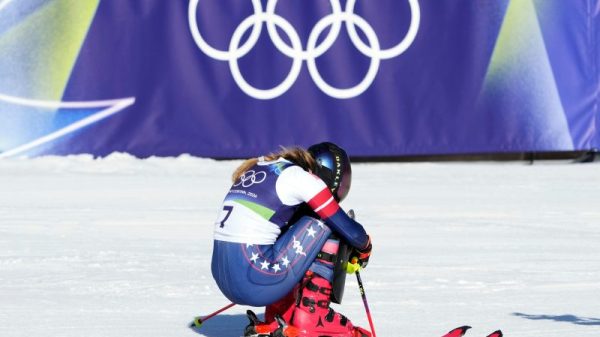
After she crossed the finish line, 1.50 seconds ahead of the next closest skier — an eternity in the sport — she dropped her chest to her knees and her head in her lap. Gliding along the smooth snow at the bottom of the track in silence. Awkward, perhaps, to the average onlooker. But not to Shiffrin. This was her first Olympic gold medal without her dad there to witness it. And she was going to take the moment to sit in silence with him.
‘Maybe he doesn’t have to specifically answer,’ she said, reflecting on the last six years, ‘Which is hard. But it’s OK.’
Shiffrin used to resent people who said their departed loved ones were with them in big moments. Carrying them through the day. Anchoring them with their spiritual presence.
‘Where? The (expletive)?’ she’d think to herself, frustrated beyond comprehension. ‘… Why do you get to feel that way?’
Shiffrin’s mother Eileen didn’t think her daughter would ever ski again after Jeff fell off the roof of their family home. She heard his heart stop beating in the hospital. She struggled to get out of bed, eat or drink. She lost weight.
She battled between a refusal to accept a life without her dad and a desire to stick around for ski racing. Something she loved to do. And something she was great at. Her grief compounded with traumatic injuries — to her own body as well as her fiancé Norwegian skier Aleks Aamodt Kilde — to create what she described as ‘a perfect-storm situation for PTSD to take hold.’
Treatment has been an ongoing process. Lots of self-reflection. Lots of manifesting. Lots of loud, positive self-talk.
Redemption defined the buzz around Shiffrin heading into the 2026 Milan Cortina Winter Games. Could the most accomplished skier of all time end an 0-for-6 Olympic medal drought here? She blew the first event, women’s team combined, by squandering speed skier Breezy Johnson’s lead in the downhill with the 15th slowest slalom in the field of 18. They finished fourth — 0.06 seconds off the podium.
‘There will always be criticism,’ Shiffrin said Wednesday, reflecting on the overwhelming narrative after her fourth-place finish that Cortina may just be Beijing all over again. ‘But I am here to earn the moment.’
Shiffrin wasn’t a medal favorite in her next race: Giant slalom. She finished third in her last GS before the Olympics, but it was her first podium in the event in two years. She hasn’t won a GS since December 2023. A devastating crash during the event 15 months ago left her with an abdominal puncture wound.
Feeling good rounding curves bodes well for slalom skiing, which means a shorter course with quicker turns. And sure enough, she obliterated the competition Wednesday. Her 1.50-second margin of victory was the largest in any Olympic Alpine skiing event since 1998. It was one one-hundredth slower than the combined margin of victory from every women’s Olympic slalom race from Nagano to Beijing.
She looked over at the big screen for her time, unable to read it for a moment, which isn’t unusual. Green means good, but sometimes it’s hard to believe. This was one of those times.
‘Wait, are we sure?’ she thought. ‘Because it would be embarrassing to celebrate and have that not be real.’
Oh, we’re sure. More than sure. She won Olympic gold. By a lot.
That’s when Shiffrin communed with her dad, whom she could finally accept was really gone.
Before stepping up to accept her medal, Shiffrin kissed her fingertips, pressed them into the snow.
‘I don’t want to be in life without my dad,’ she said after ceremony. ‘And maybe today was the first time that I could actually accept this like reality, and instead of thinking I would be going in this moment without him, to take the moment to be silent with him.’
Reach USA TODAY Network sports reporter Payton Titus at ptitus@gannett.com, and follow her on X @petitus25.