





As the hours tick by, former college basketball player Jarred Shaw wonders daily whether his life has come down to this bleak existence and whether he’ll ever see his home more than 10,000 miles away.
Jammed into a room no bigger than a typical New York City studio apartment with 11 other men, Shaw is far removed from the familiarity of the camaraderie of a locker room filled with teammates focused on winning a basketball game.
Shaw is one of approximately 276,000 people imprisoned in Indonesia, having been convicted of a drug offense and attempting to return to the United States as his medical condition deteriorates. Complicating matters, Shaw has Crohn’s disease, an inflammatory bowel disease that, according to the Mayo Clinic, causes swelling and irritation of the tissues in the digestive tract. It can lead to pain, severe diarrhea, fatigue, weight loss, and malnutrition.Shaw, now 35, has already lost 40 pounds from his playing weight of 245 pounds on a 6-foot-10 frame, and the risk of colorectal cancer is high in people with Crohn’s disease.
“I can wake up any moment and be hospitalized,” Shaw told USA TODAY Sports. “Some days are better than others. It’s not where it needs to be. I still feel sick quite often. I am asking for sympathy, and hopefully a miracle can happen.”
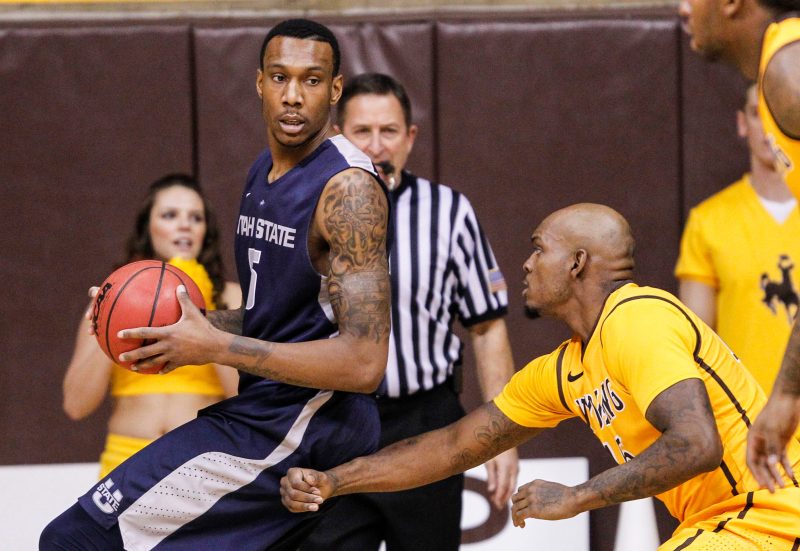
A native of Dallas, Shaw played college basketball at Oklahoma State and Utah State, averaging 14.2 points per game in his final two seasons with the Aggies, and earning second-team All-Western Athletic Conference honors before being selected 18th in the 2015 NBA Development League draft by the Santa Cruz Warriors. Among his professional basketball stops, he has played in Japan, Tunisia, Lebanon, and Saudi Arabia.
Shaw won an Indonesian Basketball League Championship in 2023 with Prawira Harum Bandung and was named an IBL All-Star Game reserve in 2024, suiting up for Satria Muda Pertamina.
Mailed CBD gummies, an arrest and declining health in a prison cell
But his current saga began on May 7, 2025. Earlier that day, Shaw’s Tangerang Hawks scored a home victory over his former team, Satria Muda, with Shaw notching 28 points, 12 rebounds, and 4 assists.
Shaw was later detained by Indonesian authorities on suspicion of drug trafficking after receiving a package of cannabidiol (CBD) gummies from Thailand, which he says he took only to combat symptoms of Crohn’s disease. Recreational marijuana was legal in Thailand at the time of Shaw’s arrest.
In a subsequent search of Shaw’s apartment in Tangerang regency, west of the Indonesian capital of Jakarta, authorities found 132 pieces of cannabis candies called Delta 9 THC (tetrahydrocannabinol).
The gummies seized weighed 30 ounces – less than two pounds. After Shaw’s arrest by the Soekarno-Hatta Airport Police in the lobby of his apartment complex, the Indonesian Basketball Association banned him for life, and Shaw’s deal with the Tangerang Hawks was terminated for breach of contract, which prohibited him from using illegal drugs.
Indonesia is notorious for having some of the world’s strictest drug laws, and those caught trafficking can face the death penalty. Indonesia’s last execution, in July 2016, involved four convicted drug traffickers who faced a firing squad. Shaw is believed to be the first American to escape that sentence after being convicted of a drug crime in Indonesia.
Shaw was ultimately convicted in December 2025 and sentenced to 26 months in prison. During the trial, medical tests revealed that Shaw needed to be hospitalized because of his condition; he has yet to receive medical attention since his sentence.
“I feel like that’s what’s most important. Yeah, I committed a crime I wasn’t aware of. You know, the laws and stuff here,” Shaw said. “But I feel like the most important thing for me right now, and that’s to get back to Texas so I can get to a doctor, get back to my family, to my mom. I just need to get deported back to America, so I can get back to taking care of myself.”
According to Shaw’s legal team and medical documents obtained by USA TODAY Sports, his condition is dire, as his health is deteriorating. He is suffering from three active infections, gastrointestinal bleeding, and complications from Crohn’s disease that require specialized care unavailable at his current facility. Shaw still needs a gastroscopy, colonoscopy, polypectomy, intestinal ultrasound, and a CT enterography as part of his treatment plan, when or if he is released from prison. Those procedures will require a minimum three-day hospital stay.
Shaw is receiving support from an international criminal justice advocate, Donte West, based in Kansas City, Missouri, who is serving as his primary negotiator, and from Vlasic Labs, which has raised money to help nonviolent cannabis prisoners pay for commissary and hire attorneys on their behalf by sponsoring a golf tournament. Once West was on board to help, he said he flew to Indonesia, planning to stay only a few weeks but remained for the duration of Shaw’s trial. Roger Volodarsky, the CEO of PuffCo, a company that provides information on extract consumption, has also donated to Shaw’s cause.
West knows a thing or two about trials involving cannabis possession. He was sentenced to seven years and eight months in a Kansas prison in 2017 for marijuana possession as a first-time offender. That sentence was overturned in 2021 and he was exonerated after serving three years in prison.
Shaw waits for release, relief in crowded, challenging conditions
When he was first arrested, Shaw spent his time at Tangerang prison, best known for a 2021 fire that killed 41 inmates and injured more than 80 others. That prison, built in 1972, was originally designed to house about 900 inmates. Its population has since swelled to more than 2,000.
Shaw is now housed at Lapas Kelas 1 Tangerang prison, which has similar crowding and safety issues as Tangerang. To help take his mind off the living conditions, he wakes up mid-morning to exercise, usually doing yoga stretches, and talks to his family via video call. Shaw says the prison guards are known to smoke cigarettes and wear flip-flops on duty.
“I’m a simple guy,” said Shaw, who also spends his days working on a book detailing his experiences. “I really don’t do too much. I don’t really go outside my space. You know, it’s freezing already. I’m not here to really make friends or anything. I just stick to my stuff. But my day-to-day, it is just that I try to take a little medicine that they give me, but it’s not really helping.”
Shaw’s medical symptoms vary. Some days, he is violently ill due to a 2022 diagnosis of ulcerated colitis, an inflammatory bowel disease. On other days, it’s indigestion caused by the food served at the prison. Bouts of depression add another layer to Shaw’s precarious situation.
With the help of West and officials at the U.S. Embassy in Jakarta, Shaw has at least been able to see a doctor to obtain some of the care and the medicine he needs and to ensure his rights are not being violated, even though he says the medicine he gets doesn’t solve any of his issues.
“I think that was a misconception that the public was changing the narrative of him being a user, not a trafficker, to the population among us,” West said. “The most important thing is that people will use Jarred’s case to save other people’s lives.”
Advocates seek Trump administration’s help with Shaw’s release
Previous presidential administrations have been active in certain international criminal cases, especially when they feel someone has been wrongly imprisoned, and there is precedent for the United States government to intervene when one of its citizens is detained overseas or arrested for drug offenses.
The most notable case was WNBA player Brittney Griner. Griner was returning to Russia to play for Yekaterinburg UMMC in March 2022 during the WNBA’s offseason when the Russian Federal Customs Service arrested and charged her with drug smuggling after she was found with vape cartridges in her carry-on luggage.
The 10-time WNBA All-Star and two-time Olympic gold medalist was sentenced to nine years in Russian prison before President Joe Biden’s administration agreed to a prisoner exchange for Russian arms dealer Viktor Bout, who was serving a 25-year sentence for conspiring to sell millions of dollars’ worth of weapons. Griner was released in December 2022 after eight months in prison and resumed her professional basketball career months later.
“You’ll see how crazy the Indonesian prison is, so it’s just like, he has a real story to tell, and I think people make a big deal about this, and, you know, Brittney Griner got all this publicity, because of course she had the whole WNBA backing her,” West said. “Once he steps out of prison, I think it’ll be even that much more impactful too, because he’s going to save a lot of lives.”
West said his first priority is to get Shaw out of prison to deal with his medical issues. He has reached out to Secretary of State Marco Rubio and U.S. Ambassador to Indonesia Peter Haymond in hopes of securing Shaw’s release.
The 32-year-old West, who is studying under the California Law Office Program and has been a spokesperson of the nonprofit the Last Prisoner Project, believes that Haymond can help and believes Shaw is the “perfect person” to receive leniency.
West’s work with Shaw is independent of the Last Prisoner Project, which only works with prisoners incarcerated in the United States.
“I don’t think extended incarceration of Jarred Shaw protects the country of Indonesia,” West said. “That’s our goal. And, just in case the State Department doesn’t come get Jarred Shaw, I think there’s remission. Hopefully, there’s some type of parole mechanism, a medical parole. One good thing we do have is the doctor’s documents that say that he requires medical attention, and hopefully they honor that in the different governments of Indonesia.”
Consular staff have visited Shaw seven times since his arrest, remain in contact with his family, and told USA TODAY Sports they will stay closely engaged in his case.
‘The Trump Administration has no higher priority than Americans’ safety and security,’ a State Department spokesperson told USA TODAY Sports. ‘We take seriously our commitment to assist Americans abroad, and the U.S. Embassy in Jakarta is providing consular assistance to Jarred Shaw.’
West said that there has been interest in making a movie based on Shaw’s life and experience behind bars. But, for now, time is ticking.
‘I am grateful that the United States State Department has confirmed that consular officers remain actively engaged in Jarred Shaw’s case and have maintained regular contact with him during his detention in Indonesia,’ West said. ‘With the United States government closely monitoring the situation, we respectfully hope Indonesian authorities will give full consideration to the humanitarian and medical circumstances surrounding Jarred’s case as his parole review moves forward.’
Shaw says neither he nor anyone in his family has talked to anyone from the Department of State, but are ‘thankful that the leaders in Washington for the Trump administration are engaged in my situation and watching closely.’
‘I know our country is dealing with many serious issues around the world, but my hope is to return home to Texas so I can receive the medical care the doctor said I urgently need,’ Shaw said. ‘I love my country, and I do not want to die in another country.’
Shaw’s case highlights the drastically different laws and attitudes about cannabis in the United States and other countries. According to Harm Reduction International, China, Iran, North Korea, Singapore, Saudi Arabia, and Vietnam are among the countries that use the death penalty for individuals convicted of drug offences.
However, beating a death penalty sentence, no matter what the crime, is extremely rare in Indonesia, a country of 287 million. According to the Directorate General of Correction, there are nearly 600 people on Indonesia’s death row, with nearly 100 of them foreigners.
In December, President Donald Trump mandated the Drug Enforcement Agency and the Department of Justice, by executive order, to move marijuana from a Schedule I drug to a Schedule III substance. Among the Schedule I drugs, defined as substances that are abusive and have no accepted medical use, marijuana was included with heroin, lysergic acid diethylamide (LSD), and ecstasy. Although taking the drug would still be illegal at the federal level, the move has the potential to change drug regulation.
Currently, 40 states and Washington, D.C., allow for the use of medical marijuana. The legal cannabis market size in the U.S. was $21 billion in 2023 and is expected to reach $102.2 billion by the end of the decade.
Despite his incarceration and declining health, Shaw remains optimistic that he will be out of prison soon.
“I would tell my supporters, thank you for watching over me until this point. I have come a long way from beating the death penalty. My concern now is just my health, maintaining my health, and that’s to get back to Texas so I can get to a doctor, you know, get back to my family, to my mom.” Shaw said.